Who Is Responsible for a Bus Shelter? Parish, County Council or Bus Operator

Alex Thomas
Managing Director
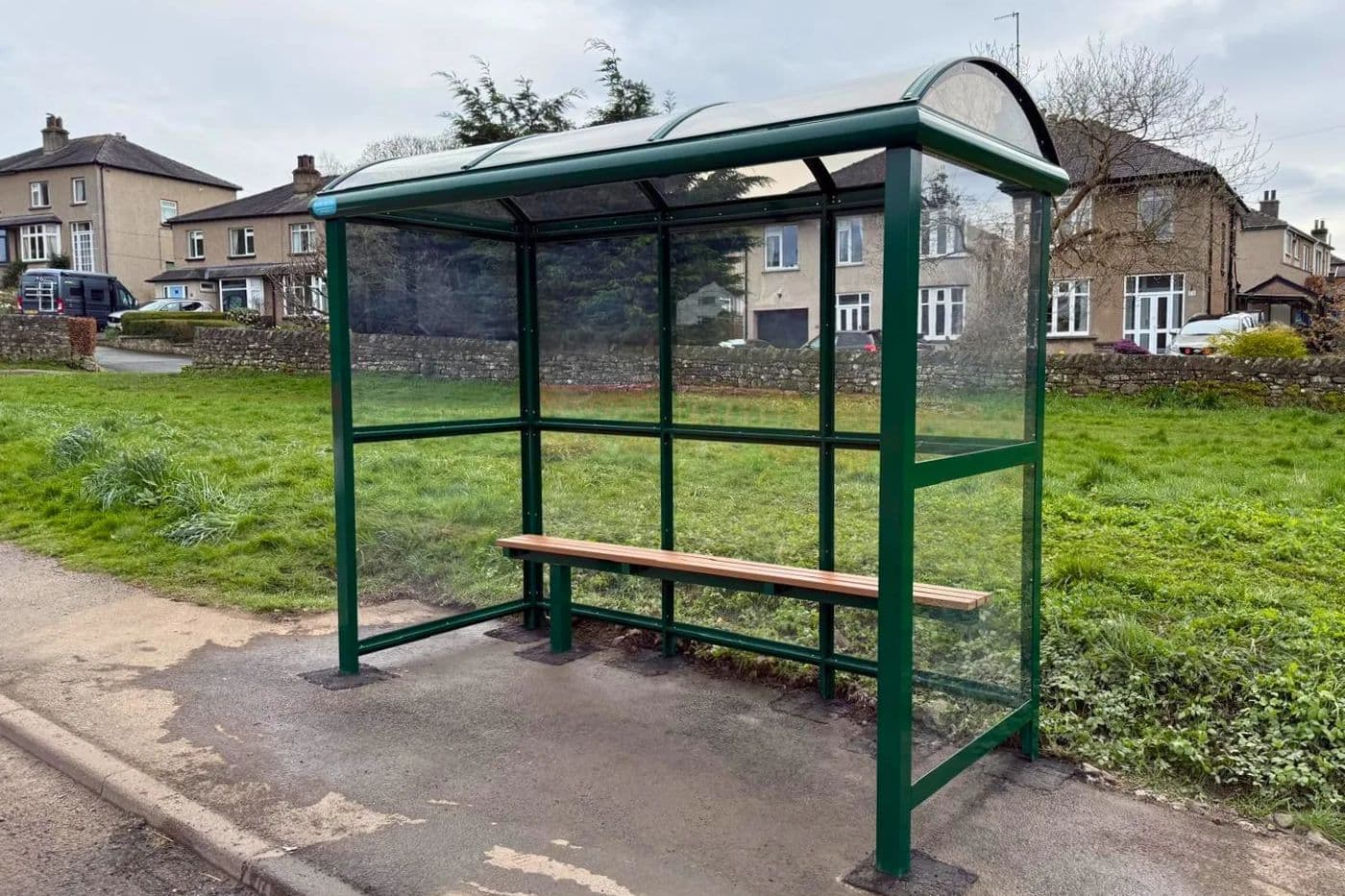
A glass panel gets smashed at the bus stop by the village hall. A resident rings the parish clerk. The clerk rings the county council. The county council says it is not theirs. The bus company says it only runs the buses. Three weeks later the glass is still on the pavement.
We hear versions of this every month. The short answer is that there is no single owner of bus shelters in the UK. Each shelter belongs to whoever put it there, or whoever has taken it on since. This post explains how to find out who that is, and what each owner is responsible for.
The four usual owners
Parish and town councils. In villages and small towns, most shelters are owned by the parish or town council. Parish councils have long-standing statutory powers to provide and maintain bus shelters, and many of the older timber and brick shelters you see in villages were put up by the parish. If the parish built it, the parish owns it, insures it and repairs it.
County, unitary or metropolitan councils. The highway authority or the passenger transport team owns shelters it has installed itself, often at busier stops on main routes or as part of a Bus Service Improvement Plan scheme. In some areas the county council also owns the flag, pole and timetable case, even where the parish owns the shelter beside it.
Advertising contractors. In towns and cities, many shelters are owned and maintained by a commercial advertising company under a long-term agreement with the council. The company installs and cleans the shelter at no cost to the council and earns its money from the advertising panels. If a shelter has an illuminated advert in the end panel, this is the first owner to check.
Bus operators. Less common, but some operators own shelters at their own stations, interchanges or depots, and occasionally at stops they have funded themselves.
There is a fifth category nobody likes: shelters nobody claims. Old shelters put up by a parish that has since lost its records, by a developer as part of a housing scheme, or by a body that no longer exists. We come back to these below.
How to find out who owns a particular shelter
Work through these in order. Most clerks have an answer by the third step.
- Check the parish asset register. Every parish and town council should hold an asset register for insurance and audit purposes. If the shelter is on it, the parish owns it. If it is on the insurance schedule but not the asset register, it is still the parish's, and the register needs updating.
- Look at the shelter. Advertising panels, a contractor's name plate, a council logo on the end panel or a reference number on the frame all point to an owner. A small plate with a phone number is usually the advertising contractor's maintenance line.
- Ask the county council's passenger transport or highways team. They usually keep a list of the shelters they own or maintain, and they will know whether an advertising agreement covers your area.
- Check old minutes. If the shelter is old and the parish has no record, search the minutes for the decade it went up. A resolution to buy or accept a shelter settles the question.
- Ask the developer or landowner. Shelters on new estates are sometimes installed under a Section 106 agreement and handed to the parish or county council when the roads are adopted. Until adoption, they may still sit with the developer.
Who is responsible for what
Ownership decides responsibility. Whoever owns the shelter is responsible for:
- Repairs and maintenance: broken glazing, damaged seating, loose fixings, leaking roofs
- Cleaning and graffiti removal, unless a maintenance contract says otherwise
- Insurance, including public liability if someone is injured by a defective shelter
- Safety inspections, particularly after vandalism or storm damage
- Replacement at the end of the shelter's life
The highway authority stays responsible for the highway itself: the footway, the kerb, the road markings and, usually, the bus stop flag and pole. Even when the parish owns the shelter, any work on the public highway needs the highway authority's approval. We cover that in Do Parish Councils Need Planning Permission for a Bus Shelter?
What to do about an unclaimed shelter
If nobody will accept ownership, the shelter is not safe to leave. A shelter with broken glass or a rotten timber frame is a liability for whoever ends up holding it.
The practical routes are:
- The parish formally takes it on. The council resolves to adopt the shelter, adds it to the asset register and insurance, and then maintains or replaces it. This is the most common outcome, especially when residents value the stop.
- The county council removes it. If it sits on the highway, is unsafe and has no owner, the highway authority can deal with it as an obstruction. Expect this to take time.
- Replace it with a new parish-owned shelter. If the old shelter is beyond repair anyway, adopting it and replacing it in one project often makes the most sense. Funding routes for that are in How Parish Councils Fund Bus Shelters.
Whichever route you take, record the decision in the minutes. The next clerk will thank you.
Repair or replace?
Once you know the shelter is yours, the next question is whether to repair it. Aluminium shelters can usually be repaired: new glazing, replacement roof sheets, new seating and a fresh powder coat. When we refurbished shelters for Stroud, the council kept its existing structures at a significantly lower cost than replacement. You can see that job here: Stroud bus shelter repairs.
Timber and older steel shelters are a different story. Rot at the base of the posts or rust through the frame usually means replacement is the better long-term spend. When to Replace a Wooden Bus Shelter walks through the signs, and How Long Does a Bus Shelter Last? covers what to expect from each material.
A simple checklist for clerks
- Is every shelter in the parish on the asset register, with a photo and location?
- Is each one on the insurance schedule?
- Is there a named person who inspects them, and how often?
- Do you know which shelters belong to the county council or an advertising contractor, and who to call for each?
- Is there a budget line or reserve for repairs and eventual replacement?
If the answer to any of these is no, it is worth an agenda item before the next storm or vandalism report lands on your desk.
Where we can help
We repair, refurbish and replace bus shelters for parish and town councils across the UK, from our workshop in Lancashire. If you have a shelter that needs looking at, we can assess it and tell you honestly whether it is worth repairing.
See bus shelter repairs, parish council bus shelters, or the full Parish Council Bus Shelter Guide. Or call 01704 547 321.
Managing Director, Alotek Shelters Ltd
About Alex Thomas
Managing Director of Alotek Shelters since 2021. Trained in CAD and design at Southampton Solent University (BSc, 2:1). Design, fabricate and install from the Lancashire workshop.