


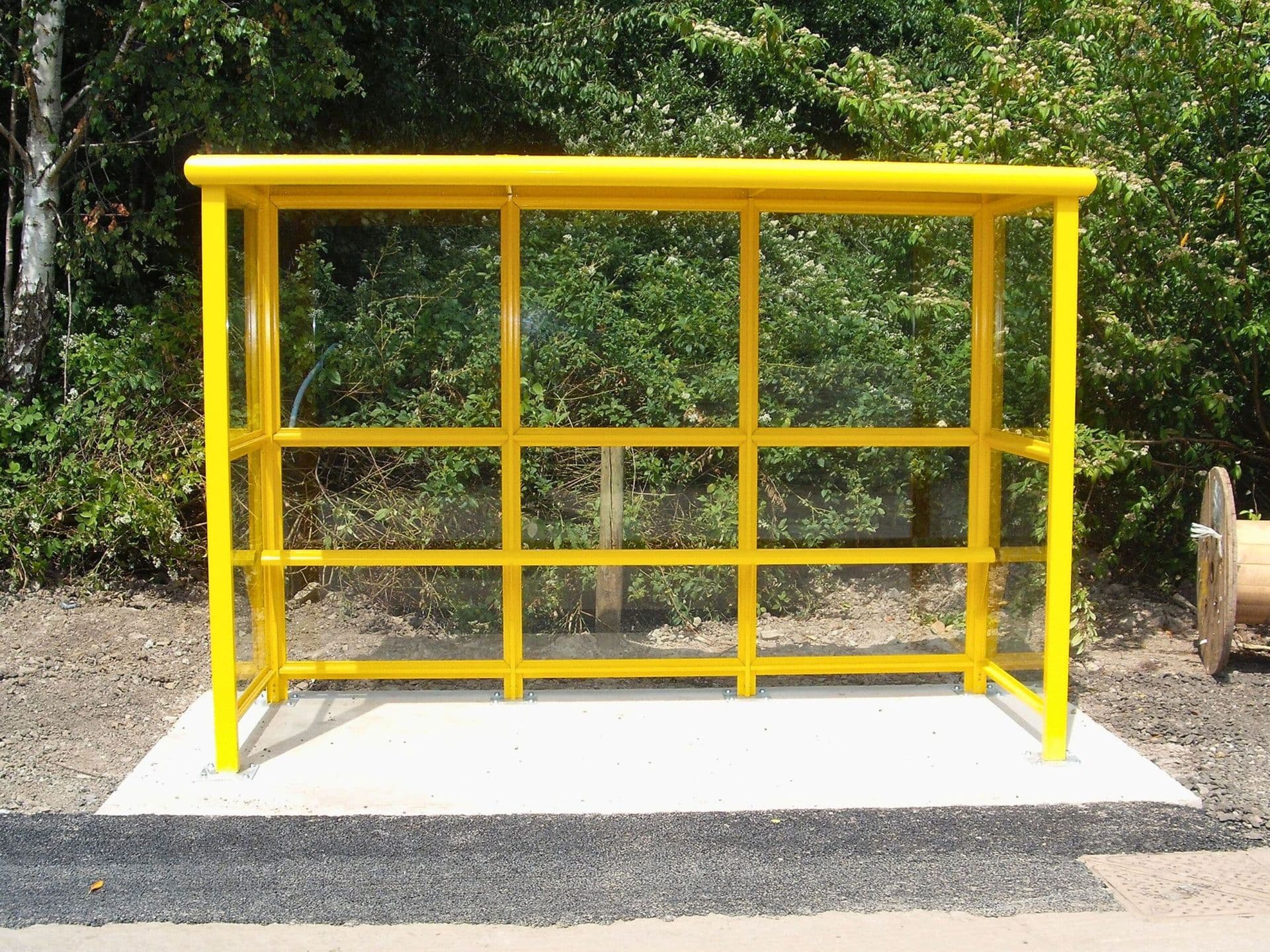
The Windsor: flat roof
A clean, modern shelter with a flat roof line. It suits town centres, main roads and new housing estates where good sightlines for drivers and passengers matter.
Aluminium bus shelters designed and made in our Lancashire workshop. Flat, dome or heritage pitched roofs, toughened glass or polycarbonate, any RAL colour. Free site survey.
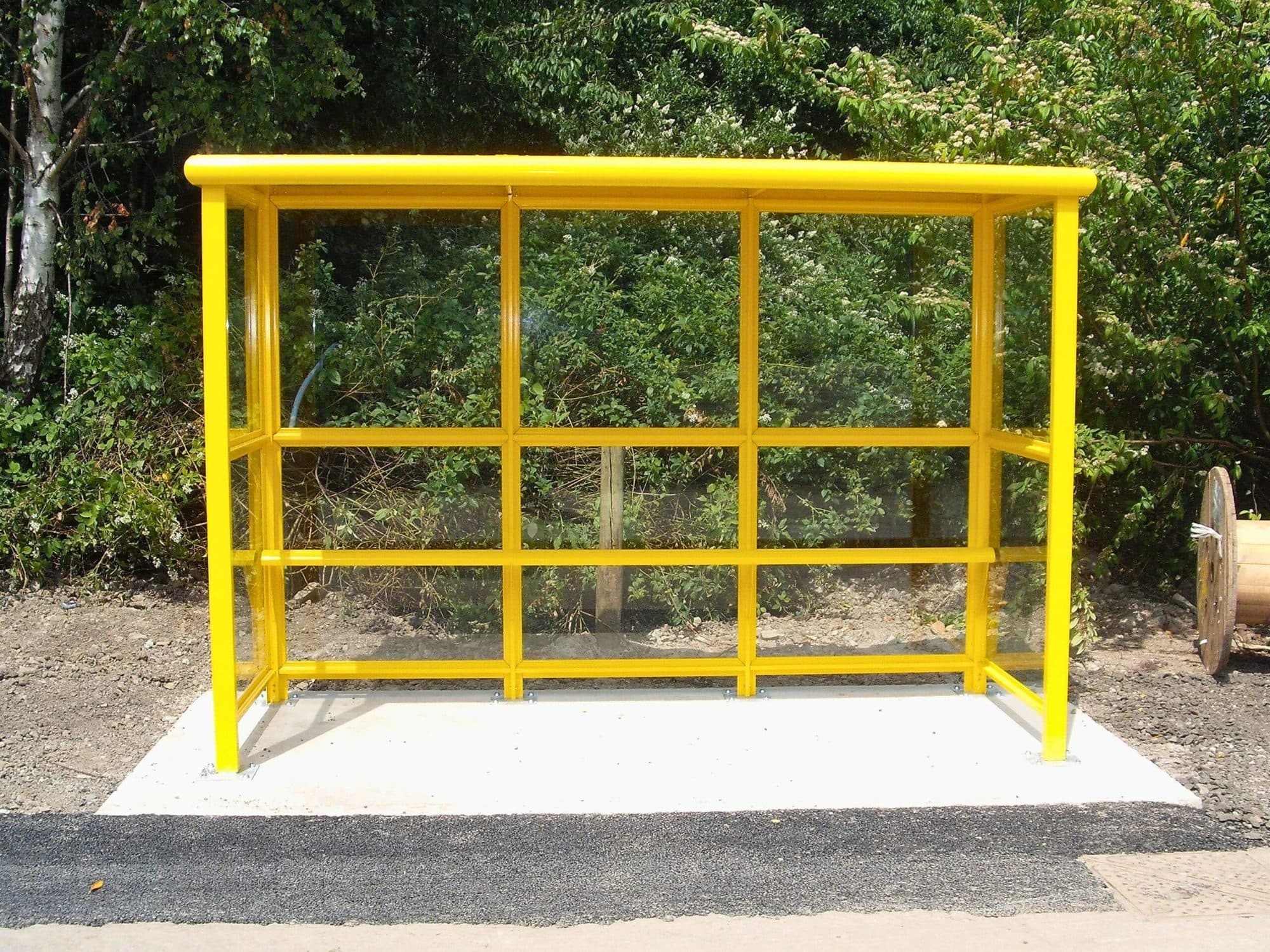
The old shelter at the village stop has had its day. Here is how a parish council gets a new one in the ground, from first idea to finished shelter. First, check who owns the stop. Parish councils own many village shelters; the county council owns others. On the public highway, a shelter is usually permitted development, so no planning application is needed. Next, a free site survey. It usually takes thirty to forty-five minutes, and you get the dimensioned drawings the highways team will ask for, at no extra cost. Then quotes, and a decision at council. Meeting cycles mean budget approval usually takes six to eight weeks, so start early. Highways approval is always needed, even when planning permission is not. It takes four to twelve weeks. Do not place an order until you have it. We then make your shelter in our Lancashire workshop, and our own team installs it, usually four to six weeks from order. Allow three to six months in all. Start with a free site survey from Alotek.
Watch: for parish and town councils
Most of our bus shelters go to parish and town councils. This short film walks through each step, from checking who owns the stop to installation day.
Our bus shelters provide comfortable, weatherproof waiting areas for passengers across the UK. Manufactured from high-grade aluminium with toughened glass panels, every shelter combines durability with modern aesthetics. Available in various sizes and configurations to suit urban and rural locations.
We design and make street furniture, and we understand the unique demands placed on bus shelters. From heavy passenger traffic in city centres to exposed rural locations facing harsh weather, our shelters are engineered to perform reliably for decades with minimal maintenance.
Every shelter is powder-coated in your choice of RAL colour at no extra cost, allowing you to match existing street furniture or create distinctive wayfinding through coordinated colour schemes. Optional features include solar lighting, real-time passenger information displays, advertising panels, and perch seating for accessibility compliance.
Our design service works with transport authorities, councils, and commercial clients to create solutions tailored to specific sites - whether you need a single replacement shelter or a comprehensive programme across multiple locations.
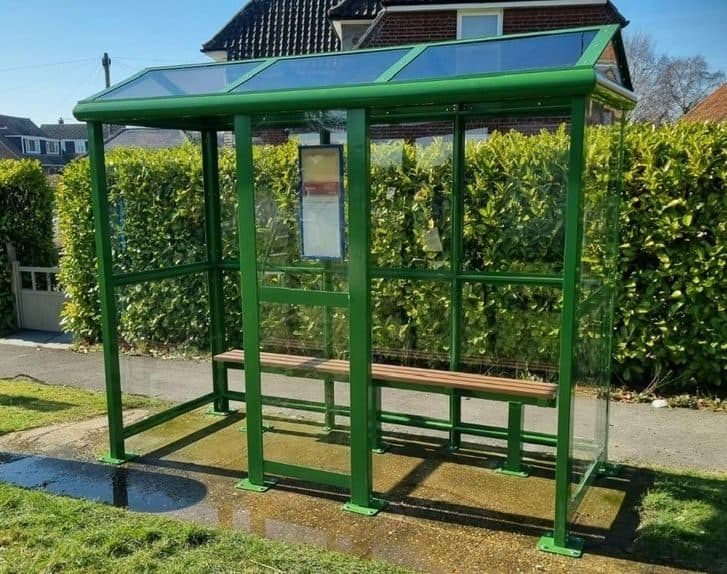
Weather-protected waiting areas improve the public transport experience.
Rust-free aluminium framework and toughened safety glass built to last decades.
Powder-coated finish resists weathering and requires minimal upkeep.
Optional advertising panels can generate revenue for local authorities.
Serving communities across the UK
Contact us for a free site survey and quotation
Alotek is a UK bus shelter manufacturer. We design, fabricate and install aluminium shelters for parish councils, town councils, local authorities and transport authorities. Everything is made at our workshop in Hesketh Bank, Lancashire, and fitted by our own installation team.
A bus shelter is a public asset that has to cope with weather, heavy use and the odd act of vandalism for decades. That is why we build in aluminium. It does not rust, it does not need repainting, and a powder-coated finish keeps its colour for years. Most councils treat a good shelter as a 20 to 30 year purchase, so the material choice matters more than the headline price.
Every shelter is made to order. You choose the size, roof style, glazing, colour and fittings. We survey the site, produce drawings, manufacture the shelter and install it, including removal of the old one if needed.
Three starting points. Each one can be sized from a single bay to a multi-bay run and finished in any RAL colour.
A clean, modern shelter with a flat roof line. It suits town centres, main roads and new housing estates where good sightlines for drivers and passengers matter.
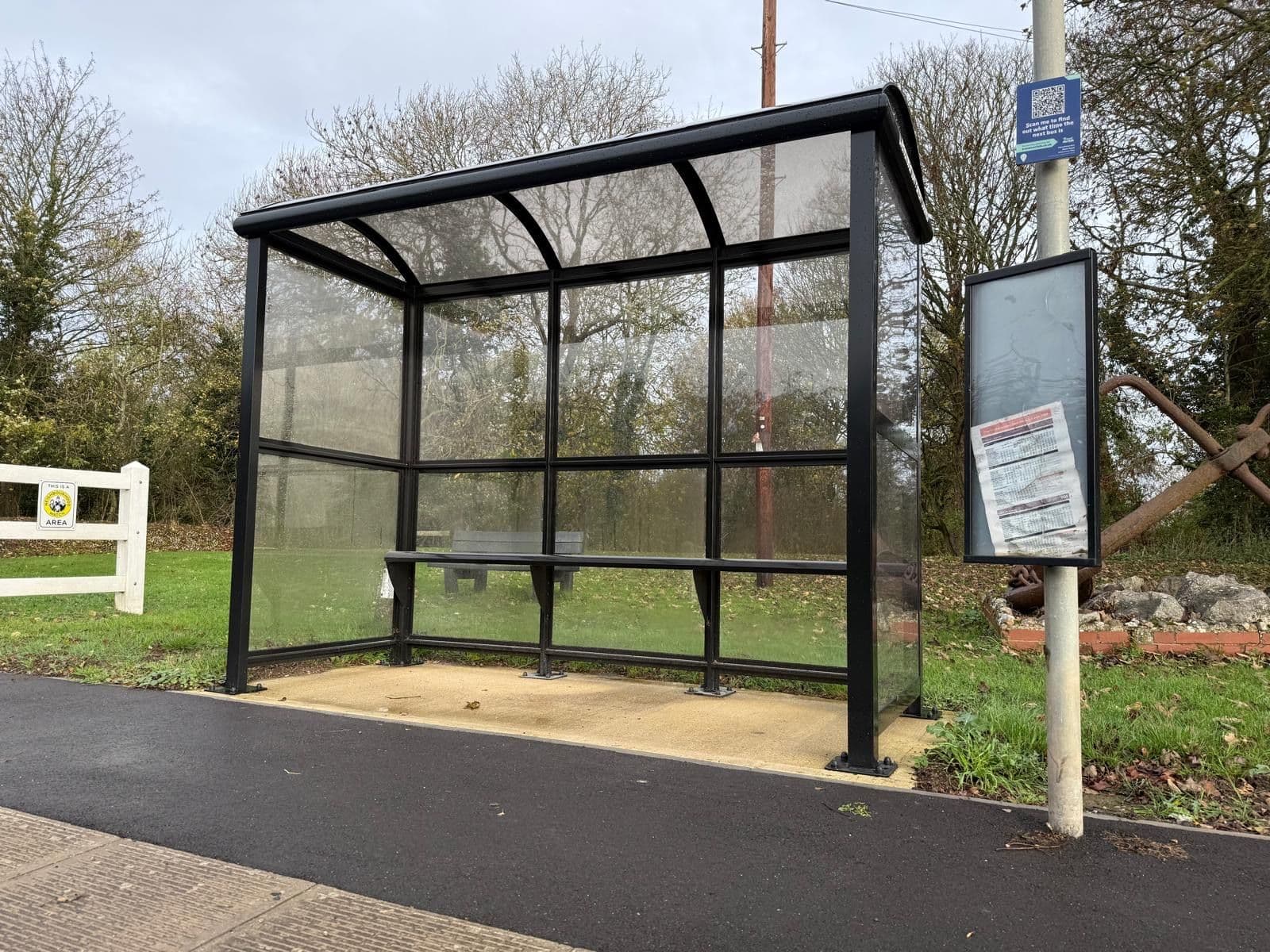
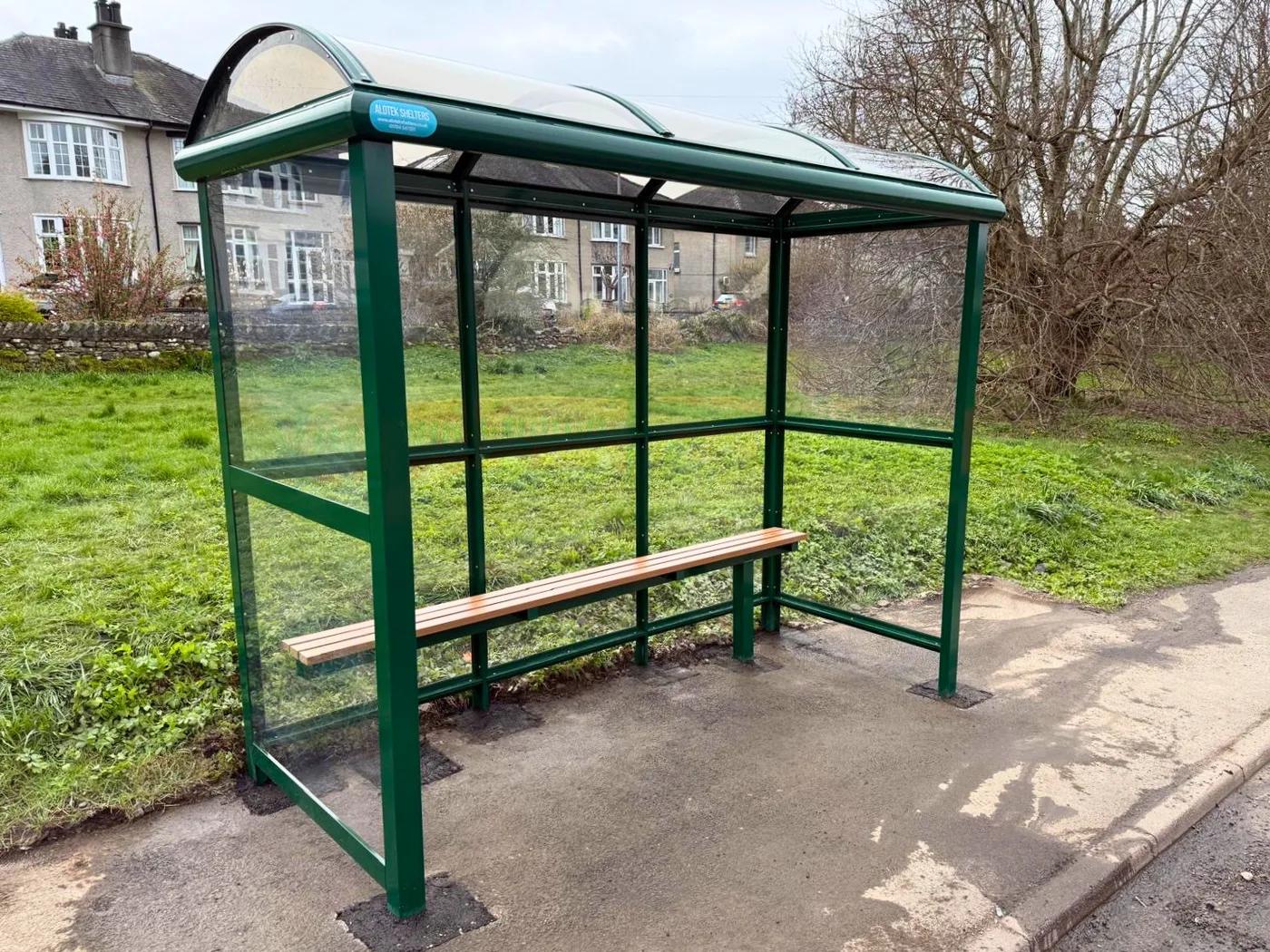
A curved roof that sheds rain and looks at home in most streets. A popular choice for parish and town councils that want a modern shelter with a softer outline.
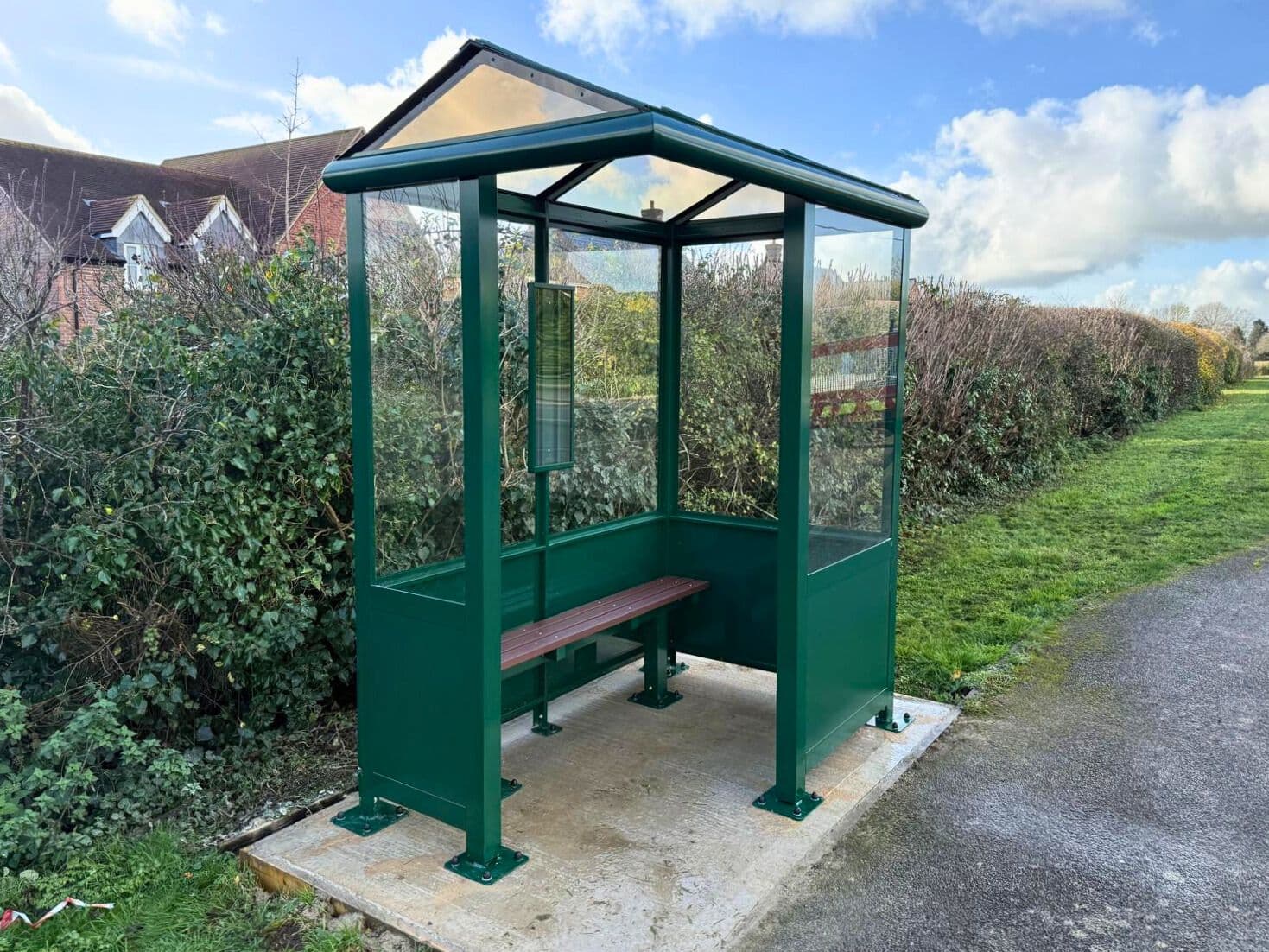
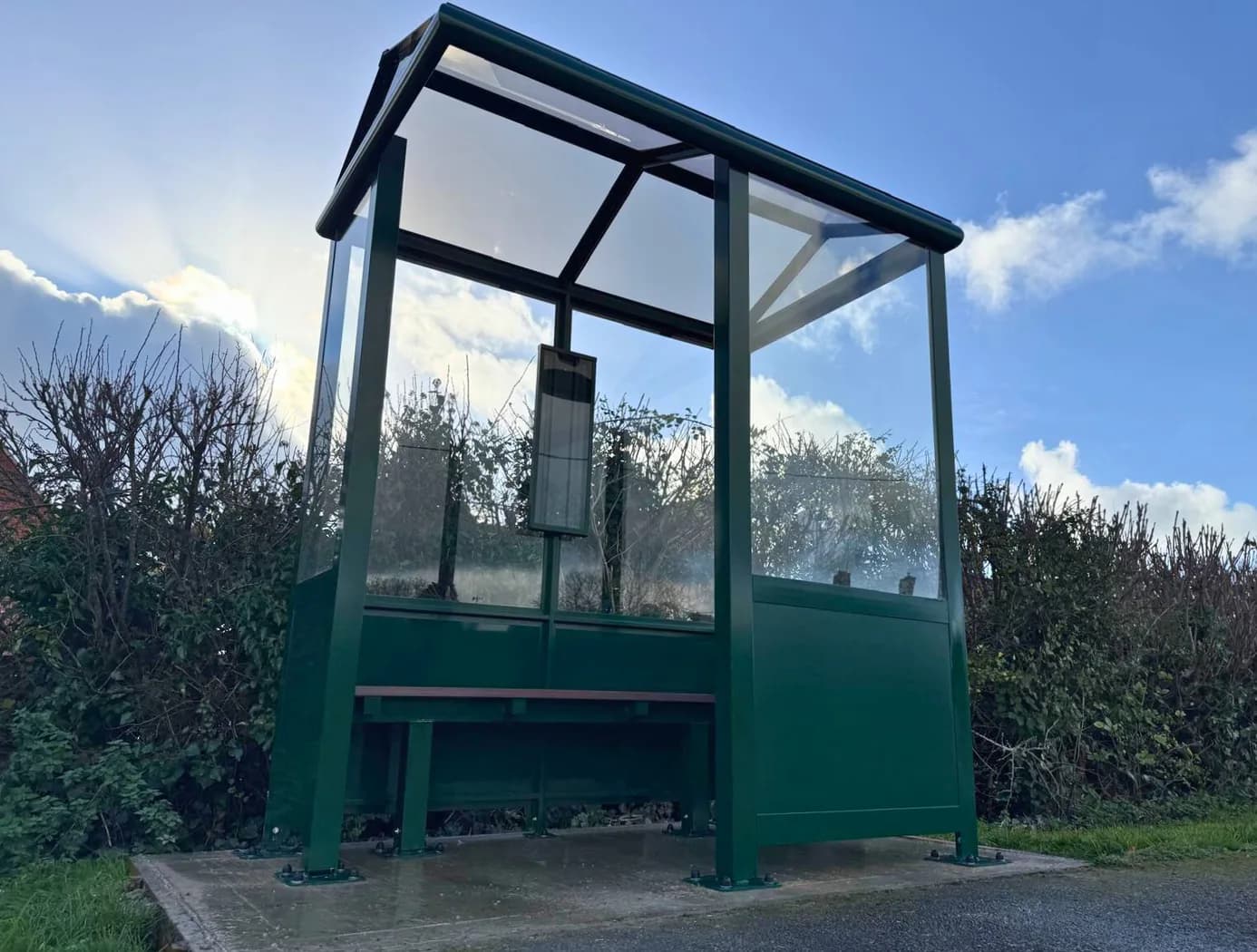
A traditional pitched roof, with optional finials, for village greens and conservation areas. Councils often choose Moss Green or Traffic Black to match the look of a timber shelter, without the rot.
What you can choose when you order a shelter from us.
Flat, dome (curved) or pitched roofs. Roof sheets are polycarbonate, so the shelter stays light inside during the day and rain runs off cleanly.
Toughened glass for clarity and scratch resistance, or polycarbonate where vandalism is a risk. Solid lower panels are available for a heritage look or extra protection.
Shelters are designed with accessibility in mind, in line with DDA guidance for wheelchair users and passenger safety. We check clear widths against your footway at survey.
The aluminium frame is powder-coated in any RAL colour. Match your existing street furniture, your council colours or a conservation area scheme.
A bench is the usual choice. Perch seats and tip-up seats suit narrow footways, and seats can be designed to discourage rough sleeping.
LED lighting, solar or mains powered, makes stops safer after dark. Timetable cases and noticeboards can be built into the frame.
One contractor for the whole job. No middlemen.
We visit the stop, measure the footway and check ground conditions. The survey is free.
You get dimensioned drawings and a fixed written quote to take to your council meeting.
We fabricate and powder-coat the shelter at our Lancashire workshop.
If there is an old shelter, we take it down and dispose of it responsibly.
Our team fixes the new shelter in place and leaves the site clean and ready to use.
Parish and town councils are our most regular customers. Many are replacing a tired timber or steel shelter and want something that will not need attention every year. Our parish council bus shelters page covers the process for clerks and councillors.
Local authorities and transport authorities buy shelters for new routes, interchange upgrades and housing developments. We can match an existing specification and colour across a whole network.
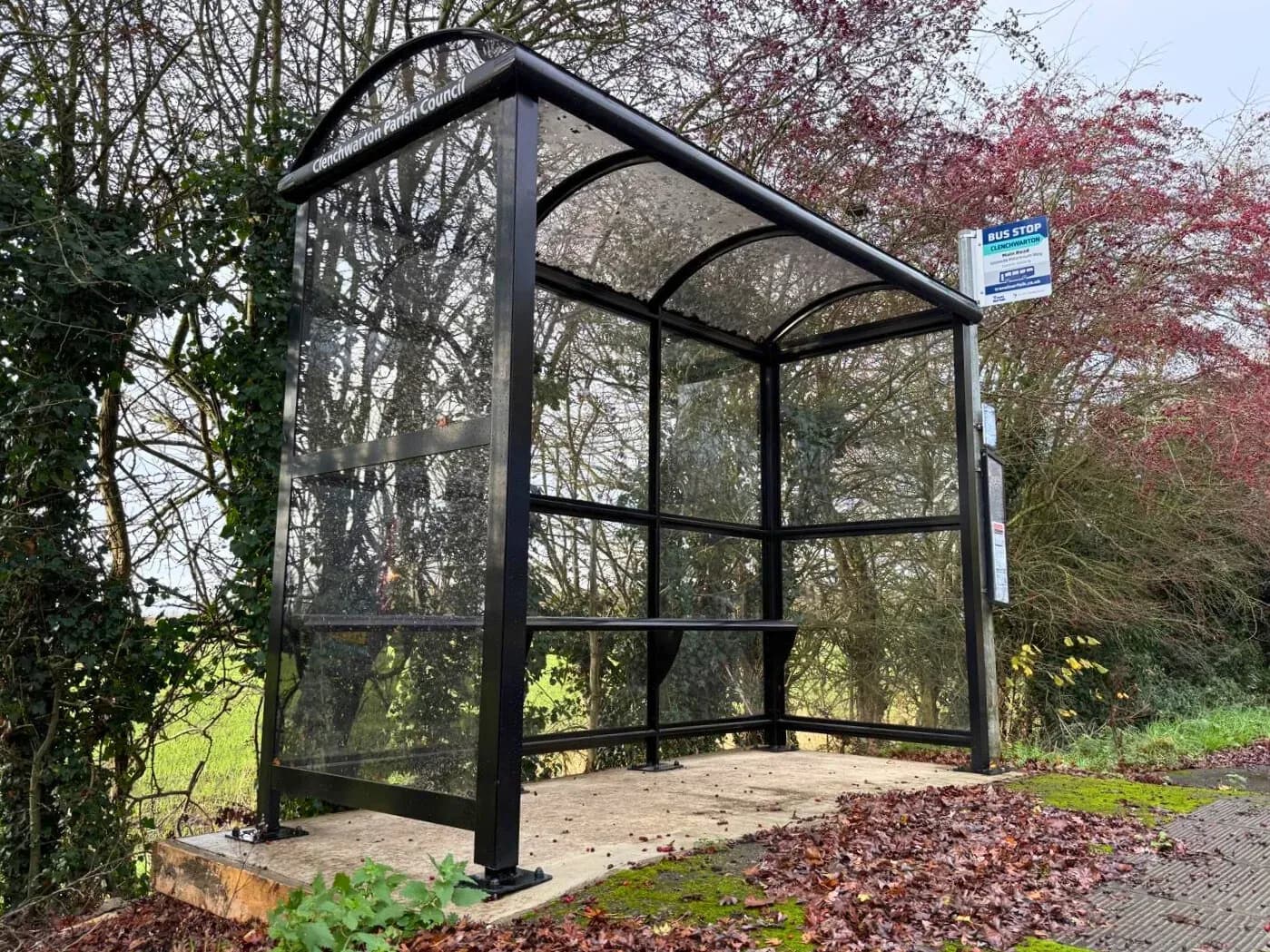
We have 6 completed council bus shelter projects documented with photos, including Kendal Town Council and Clenchwarton Parish Council.
For most parish and town councils, a standard aluminium shelter supplied and installed costs between £3,500 and £8,000 plus VAT. Heritage or bespoke designs run from about £6,000 to £15,000, depending on size and detailing.
The main things that move the price are the number of bays, the glazing, extras such as lighting, and the groundworks and traffic management the site needs. Read our full bus shelter cost guide for a detailed breakdown, or ask us for a fixed quote.
REAL PROJECTS · REAL PHOTOS
Parish, town and borough councils across the UK, from Norfolk villages to Cumbrian market towns. Every project is photographed from groundworks to completion.
We repair any make or model across the UK: broken panels, vandalism, vehicle damage and full refurbishment.
Yes. We design and fabricate every shelter at our workshop in Hesketh Bank, Lancashire, and our own team installs them across the UK.
For most parish and town councils, a standard aluminium shelter supplied and installed costs between £3,500 and £8,000 plus VAT. Heritage or bespoke designs run from about £6,000 to £15,000. Groundworks, lighting and traffic management can add to the total. We give a fixed written quote after a free site survey.
Toughened glass stays clear and resists scratching, so it suits town centres and busy main roads. Polycarbonate is much harder to break, so we recommend it where vandalism is a known problem. Some councils use glass on the road side and polycarbonate elsewhere. We will advise on the right mix for your site.
Yes. Our shelters are designed with accessibility in mind, in line with DDA guidance for wheelchair users and passenger safety. We check the layout against your footway width at the site survey so there is clear space around the shelter.
Yes. We can dismantle and dispose of the existing shelter, whether it is timber, steel or another make, then install the new one. You get one contractor for the whole job and a clean site at the end.
Replacing an existing shelter often falls under permitted development, but a new location may need consent and highways approval. We supply the drawings and specifications you need to check with your local planning authority.
Tell us where it is going and what you need. We will arrange a free site survey and send a fixed written quote.