When to Replace a Wooden Bus Shelter: A Practical Guide for Parish Councils

Alex Thomas
Managing Director
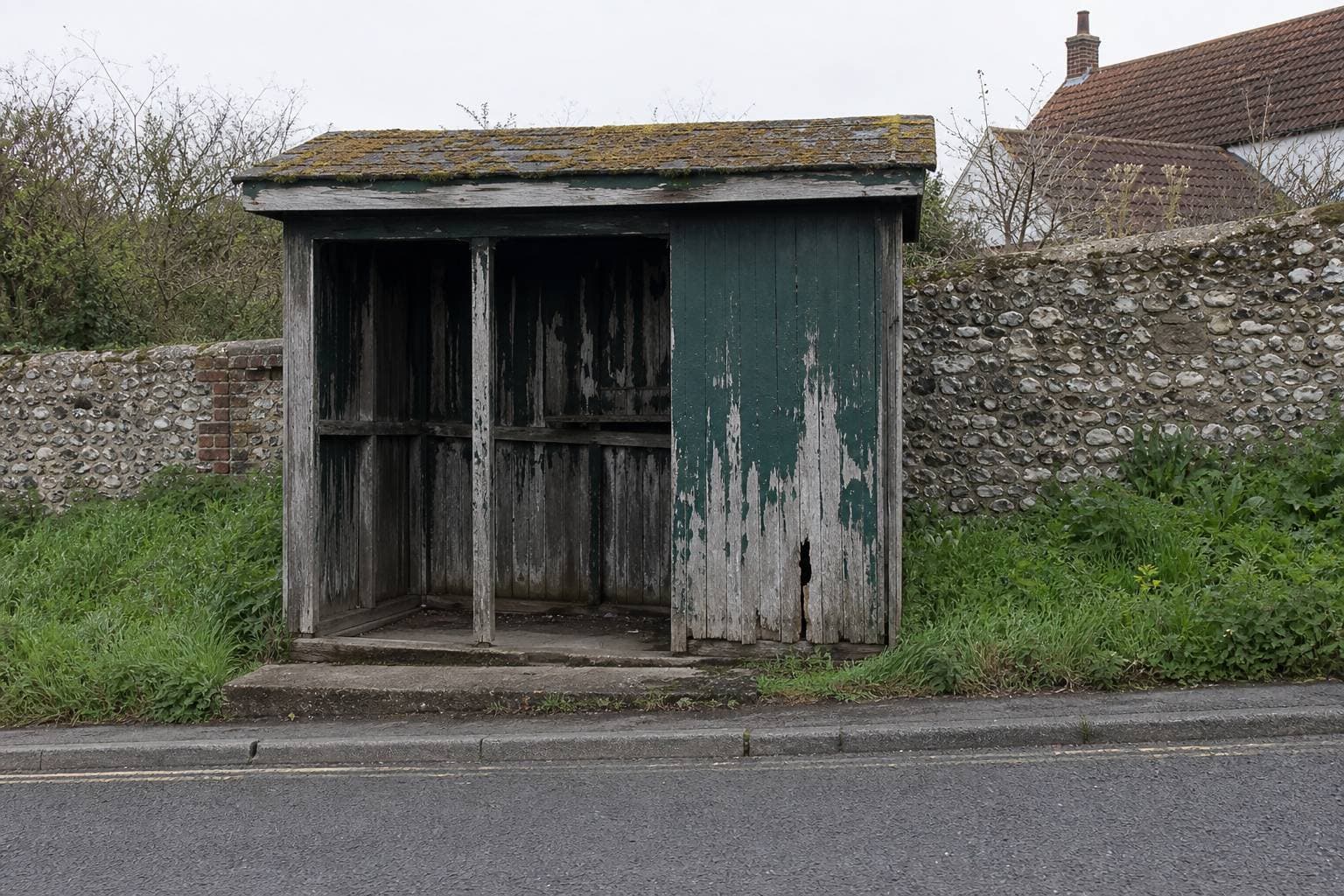
Most parish councils did not choose their bus shelter. They inherited it. A wooden structure that went up sometime in the 1980s or 1990s, painted dark green, currently doing a reasonable impression of being held together by the paint and goodwill. Every year the clerk puts "bus shelter" on the agenda. Every year the council decides it can wait until next year.
At some point, it cannot wait. This guide helps you work out when that point is, and what to do about it when it arrives.
Condition assessment: what to look for
Walk around the shelter with a critical eye. Here is what to check.
Timber condition. Press your thumb into the uprights and base rail. Soft wood indicates rot. A probe or penknife pushed gently into the timber will confirm it. Rot almost always starts at ground level where the posts enter concrete or soil, and at any horizontal surface that holds water. Once rot is established in the main structural members, the shelter is unsafe and needs replacing, not repairing.
Panel condition. Cracked, warped or missing panels compromise weatherproofing and encourage further deterioration. Individual panels can be replaced if the frame is sound. If multiple panels are failing simultaneously, it usually means the frame is deteriorating and panels are moving.
Roof condition. Leaking roofs accelerate deterioration everywhere. A felt or bitumen roof on a wooden shelter has a typical lifespan of 10 to 15 years. Check for pooling water, moss growth (which traps moisture), and any sagging.
Fixings and joints. Rusted fixings on a wooden shelter often indicate water ingress at joints. If bolts are corroding through the timber, the joint strength is compromised.
Foundation. A shelter that rocks or has visible movement at its base has a compromised foundation. This is a safety issue, not an aesthetic one.
Graffiti and vandalism. Surface graffiti is manageable but time-consuming. Structural damage from impact, such as broken or missing panels or bent and cracked uprights, is more serious and costly to repair in timber than in aluminium.
The repair-or-replace decision
The honest version: timber bus shelters are rarely worth repairing once significant deterioration has set in.
A new painted timber shelter might last 15 to 20 years in good conditions. But it needs repainting every three to five years, and each repaint costs £300 to £600 for a typical single-bay shelter. Over 20 years, you will spend £1,200 to £2,400 on repainting alone, plus any structural repairs. The total maintenance cost over the life of the shelter often exceeds the original purchase price.
Aluminium shelters have none of this. The powder coat finish lasts the life of the shelter without maintenance beyond occasional cleaning. There is no rot, no rust, no annual painting budget. A well-made aluminium shelter installed today will still be standing in 30 years and will look the same as the day it went in.
When to repair: small areas of surface rot that have not reached structural members; a single cracked panel in otherwise sound timber; a leaking roof on an otherwise sound structure. In these cases, repair buys time while you plan for replacement.
When to replace: rot in the main upright posts; more than two panels failing simultaneously; a history of repeated repairs to the same issues; the shelter is more than 20 years old and has not been properly maintained throughout. At this point, the economics of repair are poor and the safety position is uncertain.
What a replacement actually costs
This is where parish councils often get an unpleasant surprise. The budget conversation usually focuses on the shelter supply price. The full project cost is higher.
A single-bay aluminium heritage shelter, the type that suits most village settings, typically costs £3,500 to £6,000 to supply. Total installed cost including groundworks, DDA kerbing, traffic management and disposal of the old shelter runs to £7,000 to £14,000 depending on site conditions.
The variables that most affect total cost:
Ground conditions. A straightforward installation on a firm, level footway with an existing base costs significantly less than a soft verge requiring new concrete foundations, or an existing concrete base that needs breaking out and removing.
DDA kerbing requirements. If the kerb at the stop is not at the required height for accessible boarding, new kerbing is required. This is typically the most expensive associated work, running to £800 to £2,500 depending on the extent of the works and whether new tactile paving is also required.
Access and traffic management. On a quiet village road with good access, traffic management costs are low. On a main road or an A-road, formal traffic management (cones, banksmen, sometimes temporary lights) adds significantly to the installation cost.
Removal of the old structure. We include disposal of the old shelter as part of our installation service. If the old shelter has a substantial concrete base that needs breaking out, this adds to the groundworks cost.
Get a site visit before you budget. The difference between a best-case and worst-case installation cost on the same shelter can be £3,000 to £5,000.
Why heritage-style aluminium suits most parishes
The common worry is that an aluminium shelter will look wrong in a village setting: too modern, too urban, out of place next to stone walls and listed buildings.
It does not have to. Heritage-profile aluminium shelters are designed specifically for rural and village settings. A pitched roof, traditional finial details, and a deep Moss Green or Traffic Black powder-coat finish produces something that looks like the timber shelter you are replacing but lasts three times as long with no maintenance.
The distinction that matters is design profile, not material. A flat-roof glass-and-steel shelter would look wrong in a village. A heritage-profile aluminium shelter in the right colour does not.
For conservation areas or parishes with a local design guide, check the relevant policies before committing to a design. Your local planning authority may specify colour or design requirements. We can provide samples and 3D renders showing how the shelter will look at your specific site, which helps both the council decision and any consultation with residents or the planning authority.
Getting the project past the council
The standard obstacle to replacement is cost. The standard solution is framing the whole-life cost, not just the capital cost.
Compare the total cost of maintaining the wooden shelter for another 10 years (repaints, panel repairs, eventual structural work) against the capital cost of an aluminium replacement that needs no maintenance for 25 years. In most cases, the replacement cost and the accumulated maintenance cost are similar, but the replacement leaves you with a shelter that will not need attention again for a generation.
Present it that way. Bring photos of the current condition. Bring a proper quote that covers the complete project, not just the shelter. If you can show that the council is spending money on the existing shelter every two to three years anyway, the case for replacement is straightforward.
If cost is the barrier, explore the funding routes available to parish councils before telling the council that a precept increase is required. BSIP grants, county councillor locality budgets and Section 106 contributions can significantly reduce or sometimes eliminate the parish's own contribution.
For the complete guide to every funding route available, read: How Parish Councils Fund Bus Shelters: Precept, BSIP Grants and Section 106 Explained.
For everything else involved in getting a new shelter approved, installed and compliant, including highways authority, DDA, planning permission and procurement, the full picture is in: The Parish Council Bus Shelter Guide: Planning, Funding and Procurement.
Ready to get a site survey? Call 01704 547 321 or request a free survey online. We will come out, assess the condition of your existing shelter, and give you a proper quote for replacement with everything included.
Managing Director, Alotek Shelters Ltd
About Alex Thomas
Managing Director of Alotek Shelters since 2021. Trained in CAD and design at Southampton Solent University (BSc, 2:1). Design, fabricate and install from the Lancashire workshop.