Smoking Shelter Regulations for Pubs and Restaurants: What Venues Get Wrong

Alex Thomas
Managing Director
Since the Health Act 2006 banned smoking in enclosed public places, British pubs have been putting up smoking shelters in their beer gardens. Most of those shelters are non-compliant with the law they were installed to satisfy.
This is not a minor technicality. It is a widespread problem that puts licensees at genuine legal risk.
What the Health Act 2006 actually requires
The law bans smoking in premises that are "substantially enclosed." A premises is substantially enclosed if it has a roof or ceiling and the total area of the openings in the walls is less than half of the total wall area.
That is the 50% rule. At least 50% of the total wall area must be open to the outside.
The roof does not count in this calculation. A solid roof is fine. What matters is the walls.
The typical pub shelter and why it is non-compliant
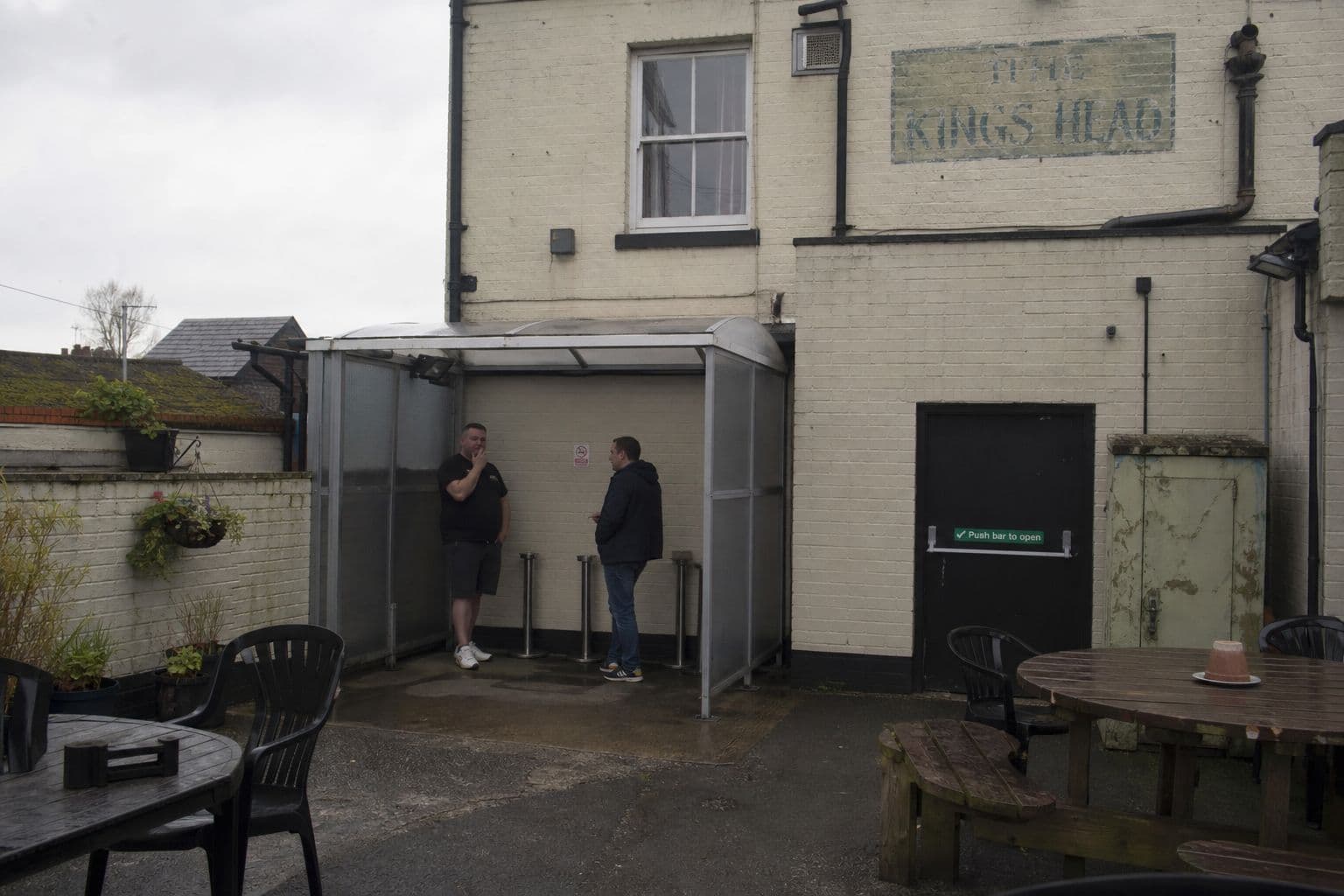
The most common smoking shelter in a British pub looks like this: a solid roof, a solid back wall, two solid side walls, and an entrance opening at the front. Three solid walls, one open front.
In that configuration, 75% of the wall area is enclosed. The shelter fails the 50% rule by a significant margin. Smoking in it is technically illegal under the same law that required the shelter to be built in the first place.
This is not a hypothetical edge case. A three-sided shelter with only the entrance open is the default configuration sold by many shelter suppliers. The fact that enforcement has been inconsistent for 19 years does not change what the law says.
What changes the enforcement picture
Enforcement of the Health Act 2006 is the responsibility of local authorities, specifically environmental health officers. For most of the last two decades, enforcement has been reactive rather than proactive: responding to complaints rather than conducting active inspections.
But the calculation changes in specific circumstances.
Licensing reviews. When a pub licence is subject to a review, the premises licence holder's compliance with all relevant legislation comes under scrutiny. A non-compliant smoking shelter that has been ignored for years can become relevant when a licence review is triggered for other reasons.
Complaints from neighbours. A formal complaint to environmental health about smoking at a pub triggers investigation. If the investigating officer finds a non-compliant shelter, the venue faces a formal compliance notice.
Change of ownership or refurbishment. New owners who inherit non-compliant infrastructure can find themselves held responsible for it, particularly if they have been advised of the issue.
The practical point: a non-compliant shelter is a liability that sits on the property, waiting for the wrong moment. Fixing it before that moment is significantly less expensive than dealing with it after.
What a compliant hospitality smoking shelter looks like
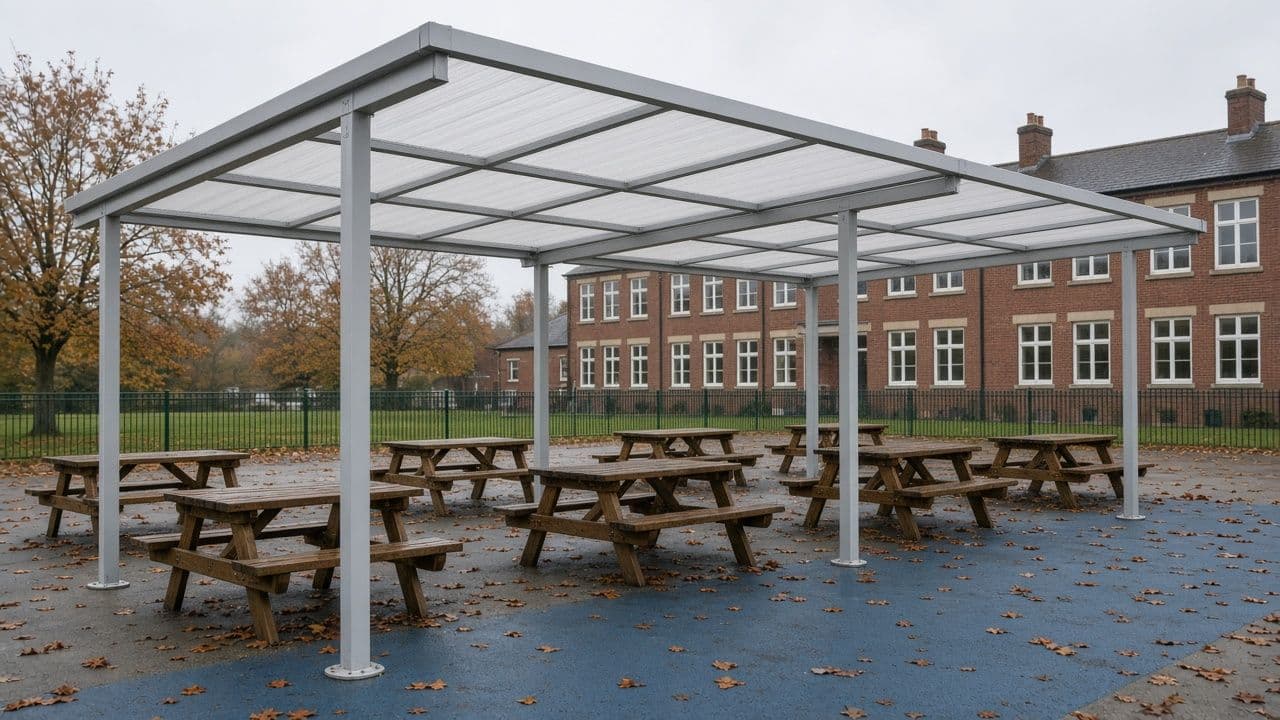
Option 1: Canopy only. A solid roof canopy with no side walls is fully compliant and very straightforward. It provides good rain protection, less wind protection. Works well in a sheltered courtyard or against a wall. This is the simplest possible solution.
Option 2: Back wall, two open sides. A solid roof, a solid back wall, and two fully open sides. The back wall provides shelter from the prevailing wind. The two open sides mean the enclosed wall area is about 25%, well within the 50% rule. This is the most commonly specified compliant shelter for hospitality venues: practical, weatherproof enough for most UK conditions, clearly legal.
Option 3: Back wall, partial side screens. A solid roof, solid back wall, and polycarbonate or mesh screens on the two sides that do not extend to the full height or width of the opening. The screens provide wind protection while maintaining ventilation and keeping the open area above 50%. This requires careful specification to confirm it is compliant, but it is achievable and provides the best weather protection while staying legal.
The licensing angle
A smoking shelter at a pub is not just a health and safety and planning question. It sits at the intersection of licensing law, planning law, and health legislation.
If your smoking area generates noise complaints, particularly from nearby residents, those complaints can be raised as grounds at a licence review. Evening use of outdoor areas, including smoking shelters, is a common source of neighbourhood complaints.
The practical steps that reduce this risk: position the shelter away from residential boundaries where possible, set a reasonable time for outdoor area use to cease, and ensure the shelter is in a location where noise does not carry directly over a boundary.
None of this requires a planning application. It is a matter of thoughtful positioning when you are deciding where the shelter goes.
The opportunity that most pubs miss
Many pubs treat the smoking shelter as a compliance burden. That is understandable, but there is a better way to look at it.
A well-specified, properly positioned outdoor shelter improves the beer garden for everyone. A solid canopy with some wind protection creates a usable outdoor seating area in weather that would otherwise drive customers inside. Non-smokers use it too. It extends the viable season for outdoor revenue.
The venues that have done this well have not built a smoking shelter in the corner of the garden. They have built a covered outdoor area that happens to also be a designated smoking zone. The compliant configuration, solid roof and back wall with two open sides, is also a genuinely pleasant outdoor seating structure.
For the complete legal framework around smoking shelter regulations in the UK, including the 50% rule, distance requirements, planning permission, and employer duty of care, read: UK Smoking Shelter Regulations: What Employers and Venues Need to Know.
To see our range of aluminium smoking shelters manufactured in Lancashire, visit our smoking shelters product page.
Managing Director, Alotek Shelters Ltd
About Alex Thomas
Managing Director of Alotek Shelters since 2021. Trained in CAD and design at Southampton Solent University (BSc, 2:1). Design, fabricate and install from the Lancashire workshop.