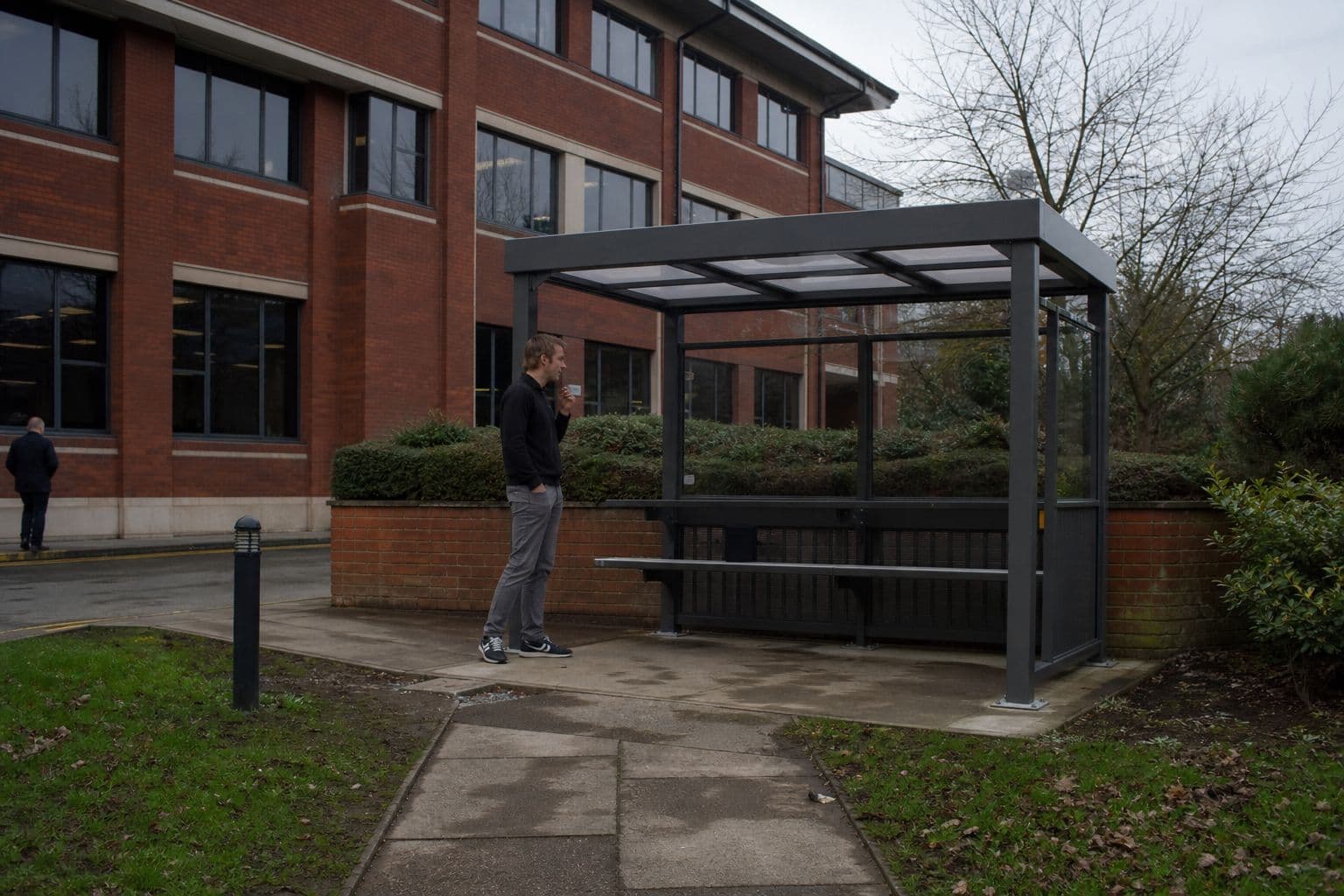
The Health Act 2006: what it actually says
The Health Act 2006 introduced a ban on smoking in enclosed public places and workplaces across England and Wales from July 2007. The equivalent legislation applies in Scotland (Smoking, Health and Social Care (Scotland) Act 2005) and Northern Ireland (Smoking (Northern Ireland) Order 2006). The rules are broadly consistent across the UK.
The key concept is "substantially enclosed." A premises is substantially enclosed if it has a ceiling or roof and the total area of the openings in the walls is less than half of the total wall area. That is where the 50% rule comes from.
This applies to any premises where people work, or to which members of the public are invited or permitted to attend. That means offices, factories, pubs, restaurants, shops, hospitality venues, schools, hospitals, and anywhere else where people are present in a professional or public capacity.
The 50% rule: exactly how it is calculated
Take the total area of all four sides of the shelter combined. Then measure the total area of all openings in those sides. If the openings are less than 50% of the total wall area, the structure is substantially enclosed and smoking inside it is illegal.
The roof does not count in this calculation. A solid roof is permitted and does not make a shelter non-compliant. What matters is the walls.
| Configuration | Enclosed wall % | Compliant? |
|---|---|---|
| Canopy only (no walls) | 0% | Yes |
| Solid roof, solid back wall, two open sides | ~25% (one of four walls) | Yes |
| Solid roof, solid back wall, one open side, one half-glazed side | ~37.5% | Yes |
| Solid roof, three solid walls, one open side | 75% | No |
| Solid roof, four solid walls, door only opening | 95%+ | No |
One important nuance: glazed or mesh screens on the open sides of a shelter generally do not count as solid walls for the purposes of the 50% rule, provided they allow adequate airflow. A shelter with clear polycarbonate screens that are open at top and bottom, or that have significant ventilation gaps, is treated differently to a fully sealed solid panel.
If you are in any doubt about whether your shelter design complies, the relevant enforcement body is your local authority. Environmental health officers can advise on compliance before installation. They would far rather advise you upfront than enforce after the fact.
How far from a building does a smoking shelter need to be?
The Health Act 2006 does not specify a minimum distance from a building entrance. What it requires is that smoke does not enter the building. In practice this means positioning the shelter so that smoke cannot be drawn in through doors, windows, or mechanical ventilation intakes.
Most employers and venues use a working guide of 3 to 5 metres from any entrance, window, or ventilation intake. This is not a statutory minimum; it is practical guidance that has become widely adopted because it works.
Where distance rules do apply
- NHS settings:NHS Smokefree Policy requires smoking areas to be at least 15 metres from all hospital buildings, including entrances and exits. Some NHS trusts extend this further.
- Schools:Schools operate a complete no-smoking policy on site under DfE guidance. There is no lawful smoking shelter location on a school premises.
- Local authority byelaws:Some local authorities have byelaws specifying distances from public buildings, libraries, or civic premises. Check with your local authority if your premises is adjacent to public buildings.
Fire safety regulations are a separate consideration. A smoking shelter must not be positioned near combustible materials, near fire escape routes, or in a location that would block emergency access. Your fire risk assessment should cover the smoking area. If it does not, it needs updating.
The practical advice: position the shelter at least 5 metres from any entrance, window, or ventilation opening, ensure it does not obstruct any fire exit or emergency access route, and confirm compliance with your fire risk assessor before installation.
Does a smoking shelter need planning permission?
In most cases, no. A standard smoking shelter for a commercial or industrial premises typically falls within permitted development rights under the Town and Country Planning (General Permitted Development) (England) Order 2015. This means no formal planning application is required.
Usually permitted development (no application needed)
- Standard freestanding shelter under 2.5m height at eaves
- Wall-attached shelter not projecting more than 3m from wall
- Structure covering less than 50% of original curtilage
- Standard commercial premises in ordinary zone
Planning permission required
- Conservation area or Article 4 direction in place
- Listed building or curtilage of a listed building
- Structure exceeds permitted development size limits
- Shelter includes illuminated advertising
- SSSI or other designated land
Pubs and hospitality venues in conservation areas are the most common situation where planning permission is needed. Many historic town centres and village settings fall within conservation areas, and any external structure, even a small smoking shelter, may require consent. The application process for a small structure is not complex, but it takes time: typically 8 to 10 weeks for a decision.
Building Regulations approval is a separate matter. A freestanding smoking shelter does not typically require Building Regulations approval. A wall-attached structure that is considered a building extension may do. If the shelter is substantial in size or attached to the main building structure, check with a building control officer.
How to check quickly
Before ordering, do two things:
- 1.Check your local authority's planning map to see if your property is in a conservation area. Most councils publish this as a searchable map on their website.
- 2.Call your local planning department and describe the proposed structure. They will tell you whether permitted development applies. This is a free service and takes a five-minute phone call.
We check this on your behalf as part of our site survey and advise you before any order is placed.
Employer duty of care: what you are actually responsible for
There is no law that requires an employer to provide a smoking shelter. The Health Act 2006 bans smoking indoors; it does not say anything about what happens outside.
However, the Health and Safety at Work Act 1974 requires employers to ensure, so far as is reasonably practicable, the health, safety, and welfare of their employees while at work. This has practical implications for outdoor smoking areas.
Designate a specific area
If employees smoke near building entrances, near fire exits, or in ad hoc locations, you have a health and safety problem. Designating a specific, clearly marked smoking area and providing a shelter there concentrates the activity and removes it from problematic locations. This is a straightforward risk control measure.
Weather protection
Employees who smoke will go outside to do so regardless of the weather. A shelter means they are not standing in doorways to stay dry, which creates both a fire exit obstruction risk and a passive smoking exposure risk for colleagues entering and leaving the building.
Slips, trips, and security
An ad hoc smoking area on a wet car park or grass verge is a slip hazard, particularly at night. A shelter with a solid base, adequate lighting, and clear access reduces this risk and keeps the area tidier. It also makes it easier to enforce your site security policy, as smoking staff are in one known location rather than scattered around the perimeter.
Lone working
Employees who smoke outside early or late in their shift may be isolated from colleagues. A designated, well-lit shelter in a visible location is safer than ad hoc smoking behind buildings or in car parks, particularly for premises with shift workers or large sites.
None of these obligations require you to provide a shelter. They require you to manage the risk. In most workplaces, providing a proper smoking shelter is the most practical way to do that.
Pubs, restaurants, and hospitality venues
The same rules apply to hospitality venues as to any other premises. The Health Act 2006 does not have a separate section for pubs. But there are some practical realities specific to hospitality that are worth understanding.
The most common compliance problem in pubs
The most common smoking shelter in a pub beer garden is a three-sided structure with a solid roof, solid back wall, and two solid side walls, with just the entrance open. This is almost certainly non-compliant. Three solid walls out of four means roughly 75% of wall area is enclosed.
The fact that enforcement is inconsistent does not make non-compliant shelters legal. A pub that is investigated following a complaint, or during a licensing review, could find itself in a difficult position.
What a compliant pub smoking shelter looks like
- Option 1 (simplest): A solid roof canopy with no side walls. Fully compliant, gives good rain protection, but limited wind protection. Fine for a sheltered courtyard; less good for an exposed garden.
- Option 2 (most practical): Solid roof, solid back wall, two open sides. 25% enclosed. Provides rear protection, roof protection, and lateral airflow. This is the most commonly specified compliant shelter for pubs.
- Option 3 (maximum comfort): Solid roof, solid back wall, two partially glazed sides with significant open top sections or ventilation gaps. The glazed sections allow wind protection without counting as solid walls, provided they are adequately ventilated. This requires careful specification to confirm compliance.
Licensing considerations
In some cases, a smoking area at a pub or club may be relevant to its premises licence. If your smoking area is in a location that creates noise nuisance for neighbours, this can be raised as a licensing objection. Positioning the shelter thoughtfully, away from residential boundaries and with a closing time for outdoor use, reduces this risk significantly.
Some venues have also used their smoking shelter thoughtfully to create a better outdoor experience overall, combining it with a covered seating area that serves both smokers and non-smokers in fair weather. This is a practical approach that improves the overall beer garden without creating a segregated and unwelcoming smoking zone.
What a compliant smoking shelter costs
Smoking shelter costs vary significantly by size, materials, and specification. The table below gives realistic indicative ranges for the most common configurations.
| Type | Size | Supply and install | Notes |
|---|---|---|---|
| Basic canopy (no walls) | 2m x 2m | £800 to £1,800 | Most compliant, least weather protection |
| Shelter with back wall, two open sides | 2m x 3m | £2,000 to £4,000 | Most popular for workplaces and pubs |
| Shelter with back wall, part-glazed sides | 2m x 4m | £3,500 to £6,000 | Best balance of compliance and comfort |
| Large bespoke shelter | 3m x 6m+ | £6,000 to £15,000+ | Large sites, hospitality venues |
These prices include supply, delivery, installation, and a standard foundation. Additional costs that vary by site include groundworks (breaking and removing existing surface, laying concrete base), electrical works for lighting, and signage. Allow a 10 to 20% contingency on the above figures for all-in project cost.
An aluminium powder-coated shelter will not rust, will not need repainting, and will not corrode. Over a 15-year period, the maintenance cost is effectively zero beyond an annual wipe down and inspection. A steel shelter painted with standard paint will need repainting every three to five years in a typical UK environment, particularly in coastal or industrial areas. Factor this into your decision.
Smoking shelters manufactured in the UK
We manufacture bespoke aluminium smoking shelters to order at our facility in Lancashire. Every shelter is powder-coated in any RAL colour, fully compliant with the Health Act 2006, and installed by our own team.
Compliance confirmed before you order
We check the 50% rule on every design before manufacture. You do not receive a non-compliant shelter.
Planning checked upfront
We confirm whether permitted development applies for your site before any order is placed. No surprises.
Any RAL colour
Powder-coated in any RAL colour at no extra cost. Match your brand, your building, or specify Heritage Green for a traditional look.
UK manufactured
Made in Lancashire. No import delays. Lead times are predictable and we install our own work.
Free no-obligation quote
Tell us the site, the size and the specification. We can visit for a site survey if needed.
30-year track record
We have been making and installing outdoor shelters since 1994. Smoking shelters for workplaces, hospitals, pubs, and commercial premises across the UK.
Common questions
What is the 50% open rule for smoking shelters?
The Health Act 2006 requires that a smoking shelter is substantially open. At least 50% of the total wall area must be open to the outside. A shelter that is more than 50% enclosed is classed as a substantially enclosed premises and smoking inside it becomes illegal. The 50% rule applies to the total wall surface area combined, not just one side.
Does a smoking shelter need planning permission?
In most cases, no. A standard smoking shelter falls within permitted development rights and does not require a formal planning application. However, planning permission is required if the site is in a conservation area, if the structure is a listed building or in the curtilage of one, or if the shelter includes illuminated advertising.
How far from a building does a smoking shelter need to be?
The Health Act 2006 does not specify a minimum distance. The practical requirement is that smoke does not enter the building through doors, windows, or ventilation. Most employers use a working guide of 3 to 5 metres from any entrance or ventilation intake. NHS settings require a minimum of 15 metres.
Are employers required to provide a smoking shelter?
No. There is no legal requirement to provide a shelter. However, the Health and Safety at Work Act 1974 requires employers to manage risk. Designating a specific smoking area with a proper shelter is the most practical way to keep smoking away from entrances, fire exits, and ad hoc locations that create safety problems.
Can a smoking shelter be attached to a building?
Yes, provided the shelter still meets the 50% open rule and smoke does not enter the building. An attached shelter typically uses the building wall as one solid side, with the remaining sides open or partially glazed. The entrance must not be adjacent to a door, window, or ventilation intake.
What are the rules for pubs and restaurants?
The same Health Act 2006 rules apply. The shelter must be substantially open. Many pub smoking shelters are three-sided structures that are technically non-compliant. A compliant pub shelter has a solid roof, a solid back wall, and two open sides. This provides good protection while keeping the enclosed wall area below 50%.
How much does a compliant smoking shelter cost?
A basic canopy starts at around £800 to £1,800. A more practical shelter with back wall and two open sides typically costs £2,000 to £4,000 supply and installation for a standard 2m x 3m size. Larger bespoke shelters for high-footfall venues cost more. An aluminium shelter is maintenance-free and significantly cheaper over a 15-year period than steel alternatives.
What does a compliant smoking shelter actually look like?
A solid roof, a solid back wall, and two fully open sides. This keeps the total enclosed wall area at around 25%, well within the 50% rule. Alternatively, a canopy with no walls at all. Some venues use partial glazed screens on the open sides, provided the screens are well ventilated and do not create substantially enclosed conditions.