Aluminium vs. Steel Outdoor Shelters: A Complete Guide for UK Businesses

Alex Thomas
Managing Director
Right, let's talk about aluminium versus steel. We manufacture outdoor shelters from both materials in Lancashire, and I've got strong opinions.
But I'm going to try to put those aside and give you the straight facts. What works best depends entirely on your situation, your budget, and what you actually need the shelter to do.
The Quick Answer (If You're In A Hurry)
Go for aluminium if: You want minimal maintenance, long-term durability, and you're near the coast or in harsh weather conditions.
Go for steel if: You're on a tight budget, need maximum strength for a specific application, or you have easy access to maintenance resources.
Still here? Good. Let's get into the details.
Material Properties (The Boring But Important Stuff)
Before we talk about your specific situation, let's establish what we're actually comparing.
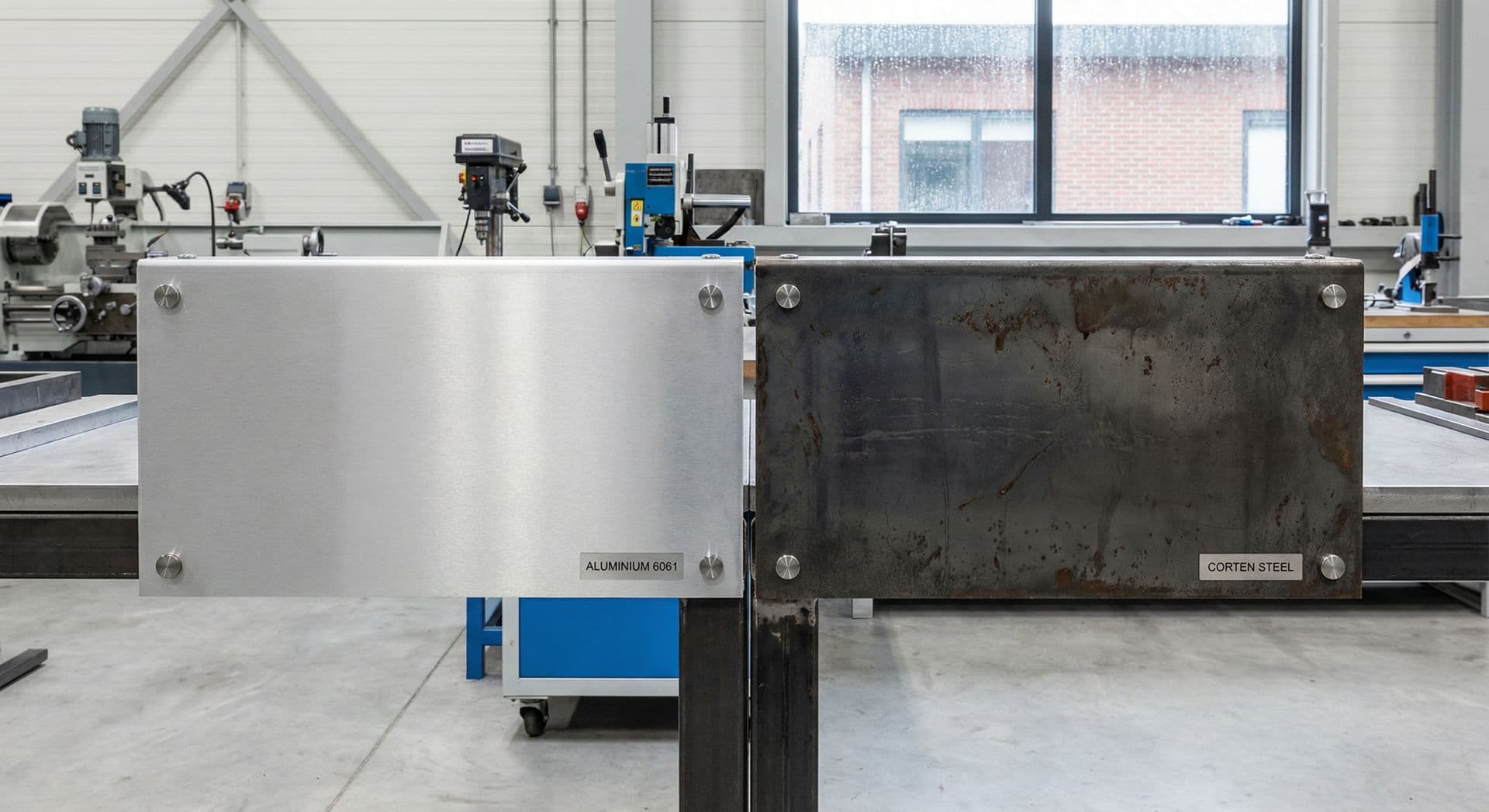
Aluminium:
- Naturally corrosion-resistant (forms a protective oxide layer)
- Lightweight (roughly one-third the weight of steel)
- Doesn't rust (different chemical properties)
- Powder coating lasts 15-20 years typically
- Conducts heat (relevant for some applications)
Steel:
- Strong and rigid
- Heavy (provides stability)
- Will rust if coating is compromised
- More affordable initial cost
- Can be galvanised for protection
Neither is "better" - they're different tools for different jobs.
The Coastal Question
If you're within 10 miles of the coast, this section will save you money.
I've seen steel shelters near coastal areas rust through in 5-7 years despite galvanising and regular maintenance. The salt air is relentless. It finds every tiny scratch in the coating and starts its work.
Aluminium in coastal locations? Barely breaks a sweat. We've got shelters on seafronts that are 15 years old and still look good.
Real example: A council in Cornwall asked me to quote for replacement steel shelters at a seafront location. The existing ones were 6 years old. I suggested aluminium instead - yes, 40% higher upfront cost, but when they factored in replacing steel shelters every 6-8 years, the numbers were clear.
They went aluminium. That was 12 years ago. Still fine.
Maintenance Reality Check
Here's where the cost comparison gets interesting.
Steel shelter maintenance typically includes:
- Inspection every 6-12 months
- Touch-up painting where coating is damaged
- Full repaint every 5-8 years
- Rust treatment as needed
- More frequent cleaning (rust stains)
Aluminium shelter maintenance typically includes:
- Occasional cleaning
- That's pretty much it
I'm not exaggerating. A well-installed aluminium shelter with proper powder coating needs almost zero maintenance beyond an occasional wash down.
Let's do the maths:
Steel shelter over 15 years:
- Initial cost: £5,000
- Annual inspections: £100 x 15 = £1,500
- Two full repaints: £800 x 2 = £1,600
- Touch-up painting: £200 per year average = £3,000
- Total: £11,100
Aluminium shelter over 15 years:
- Initial cost: £7,000
- Occasional cleaning: £50 per year = £750
- Total: £7,750
See what I mean?
This assumes you're actually doing the maintenance. If you're not, steel degrades faster and needs replacing sooner. Aluminium forgives neglect much better.
Strength and Load-Bearing
"But Alex," I hear you say, "steel's stronger, right?"
Yes and no.
Steel has higher tensile strength per unit of material. But we don't use the same thickness of both materials - that would be daft.
For outdoor shelters, we engineer each structure to handle the required loads:
- Wind load (biggest factor in the UK)
- Snow load (varies by location)
- Self-weight
- Any suspended equipment (lighting, etc.)
Aluminium structures use larger cross-sections to compensate for the material properties. End result? Both can be engineered to handle whatever you throw at them.
When steel's genuinely better:
- Very heavy suspended loads
- Extremely large span canopies
- Situations where deflection must be absolutely minimal
- Industrial environments with heavy machinery
When aluminium's genuinely better:
- Standard commercial applications
- Anywhere maintenance is difficult
- Coastal or harsh environments
- Projects where weight matters (rooftop installations, etc.)
The Lancashire Perspective
I'm based in Lancashire, and I manufacture both materials. Weather here isn't coastal harsh, but it's not gentle either. We get proper rain, we get wind, we get those long grey winters that test everything.
Shelters I installed here 20 years ago, both aluminium and steel, give me real-world data:
Well-maintained steel: Still going strong, though they've had two repaints.
Neglected steel: Rust patches, couple have needed replacing.
Aluminium (maintained or not): Basically fine. Some surface dirt, but structurally sound.
This tracks with what I see across the UK. In moderate climates with good maintenance, steel performs well. In harsh climates or with inconsistent maintenance, aluminium's reliability is worth the extra cost.
Cost Breakdown (The Real Numbers)
Let's be specific. These are 2026 prices for a standard 5m x 3m shelter with seating:
Steel Shelter:
- Base structure: £4,000-£5,000
- Galvanised and powder-coated: +£500
- Installation: £1,500
- Total: £6,000-£7,000
Aluminium Shelter:
- Base structure: £6,500-£7,500
- Powder-coated: (included)
- Installation: £1,200 (lighter, easier to handle)
- Total: £7,700-£8,700
So you're looking at roughly 25-30% more for aluminium upfront.
But remember our 15-year calculation earlier? That initial premium disappears when you factor in maintenance.
Environmental Considerations
If sustainability matters to your organisation (and increasingly it does for procurement), here's something interesting:
Aluminium:
- Highly recyclable (and retains value when recycled)
- Lower maintenance means fewer chemicals/paints over lifetime
- Longer lifespan reduces replacement frequency
Steel:
- Also recyclable
- Requires more treatment chemicals over lifetime
- May need replacing sooner in harsh environments
Neither material is "bad," but aluminium edges ahead on lifetime environmental impact due to longevity and lower maintenance requirements.
Making Your Decision
Forget what I think for a minute. Here are the questions you should ask yourself:
About Location:
- How far from the coast?
- What's your local weather pattern?
- Are there any corrosive industrial pollutants nearby?
About Maintenance:
- Who'll actually maintain it?
- What's your maintenance budget?
- Can you commit to regular inspections?
About Budget:
- What's your capital budget now?
- What's your maintenance budget over 10-15 years?
- What's your replacement cycle planning?
About Priorities:
- Lowest initial cost?
- Lowest long-term cost?
- Minimal maintenance hassle?
- Maximum strength for specific application?
Answer these honestly, and the right choice becomes pretty clear.
My Honest Recommendation
Here's what I actually tell customers:
If you've got the budget and you want to install it and forget about it, go aluminium. You'll save money long-term and eliminate maintenance headaches.
If you're on a tight initial budget but have good maintenance capability, steel works fine - just commit to looking after it properly.
If you're coastal or in harsh conditions, aluminium isn't a luxury, it's practical sense.
If you're somewhere mild and well inland, either can work - decide based on your maintenance reality and budget.
Let's Talk About Your Specific Situation
Every site's different. Every organisation has different priorities and constraints.
If you'd like to discuss what would actually work best for your specific situation, give us a ring on 01704 547 321. We manufacture both materials, so I promise you'll get an honest recommendation based on your needs, not what's easier for us to sell.
No hard sell, just practical advice from someone who has seen how these materials perform in every UK climate you can imagine.
Serving Businesses & Councils UK-Wide
We supply aluminium and steel shelters to organisations across the UK, from bus shelters to covered walkways.
Whether you're coastal or inland, urban or rural, we'll recommend the right material for your specific conditions. See all areas we serve.
Managing Director, Alotek Shelters Ltd
About Alex Thomas
Managing Director of Alotek Shelters since 2021. Trained in CAD and design at Southampton Solent University (BSc, 2:1). Design, fabricate and install from the Lancashire workshop.